Article
Don't Look Back in Anger: Re-evaluating Decades of the Jitters
Jitter characteristics, audibility limits and the high-end paradigm, by Thorsten Loesch.
DACJitterDigital FiltersAnalogue StagesAudio ScienceThis article re-evaluates three decades of jitter in the terms of my position paper The Audio Heretick’s Progress: signal fidelity against audible fidelity, and the single-number FOM: figure of merit. A single number, such as THD+N, SINAD or jitter in picoseconds, used to sum up signal fidelity, with the claim that a better number means better sound. It relates to audible fidelity only at the extremes. The Audio Heretick's Progress: the FOM →.
The his(s)tory
Jitter entered the audiophile “public eye” most likely with Robert Harley’s article CD: Jitter, Errors & Magic in Stereophile, May 1990. Stereophile has kept up a series of articles on jitter ever since (see Appendix One).
The timing uncertainty in a digital system, commonly called “jitter”, had been described in full long before, by Barry Blesser in his tutorial article in the October 1978 issue of the Journal of the Audio Engineering Society.
The jitter concern
Jitter is phase modulation of the clock at the point where digital becomes analogue. It shifts the instants at which the samples are reconstructed, and so turns an error in time into an error in voltage: the right number, at the wrong time.
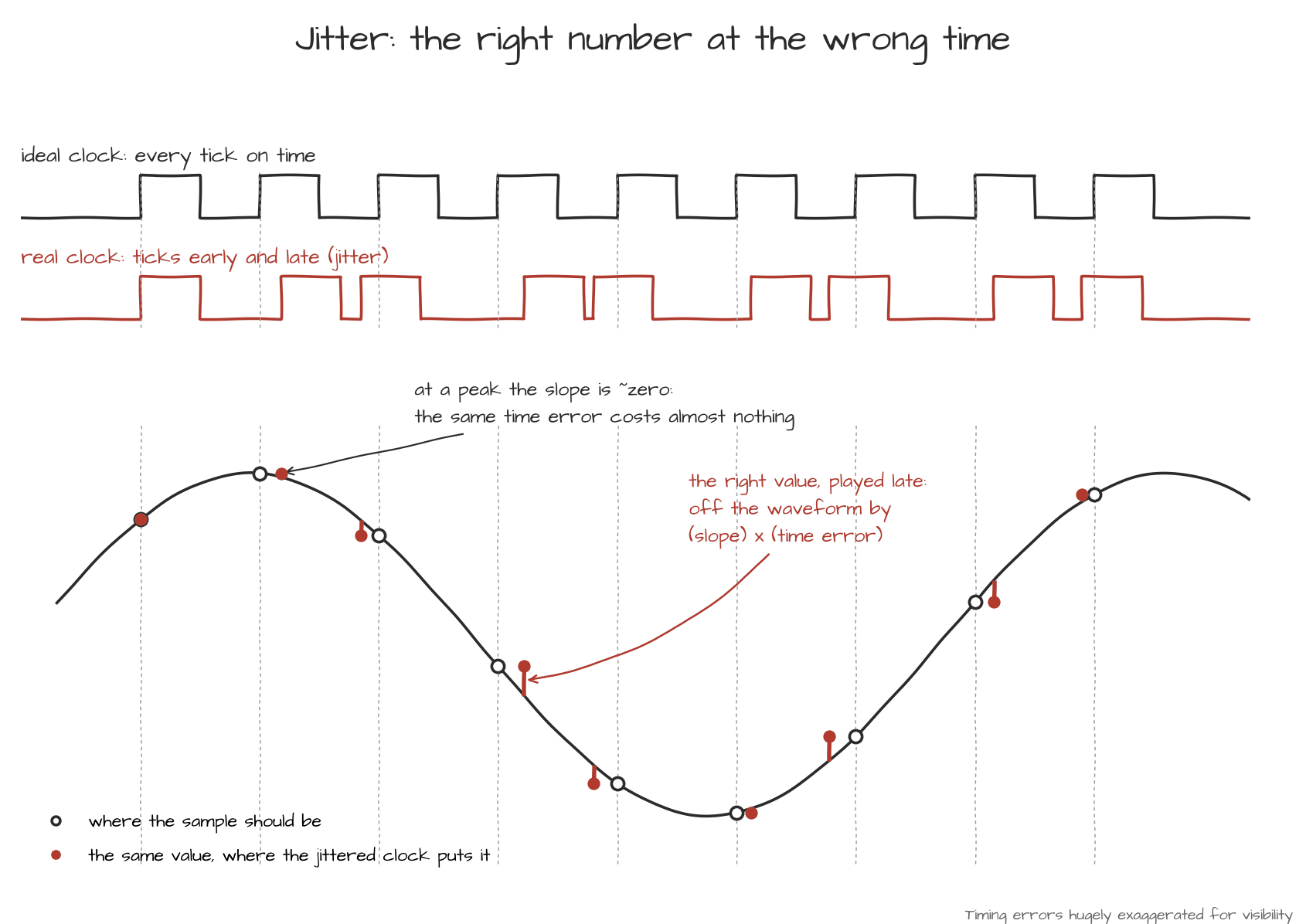
Jitter is usually expressed in nanoseconds (ns, 10−9 s) or picoseconds (ps, 10−12 s). These are very small intervals of time: in 100 ps, light travels about 3 cm. Yet digital audio theory demands far smaller ones. To keep the error on a full-scale 20 kHz tone below one LSB, 16-bit (CD) audio needs jitter below about 250 ps, and 24-bit audio below about 1 ps. John Atkinson, in A Case of the Jitters (Stereophile, 2009), gives 100 ps and 10 ps. His 100 ps for 16 bits is frequently cited, by Stereophile and other publications, even though it is incorrect; his 24-bit figure is ten times too lax.
High-end digital products are often sold on offering lower jitter than otherwise technologically similar ones, and “clock upgrades” are widely promoted. But jitter is just another FOM: figure of merit. A single number, such as THD+N, SINAD or jitter in picoseconds, used to sum up signal fidelity, with the claim that a better number means better sound. It relates to audible fidelity only at the extremes. The Audio Heretick's Progress: the FOM → for signal fidelity, without any proven correlation with audible fidelity. Therein lies the crux of the matter.
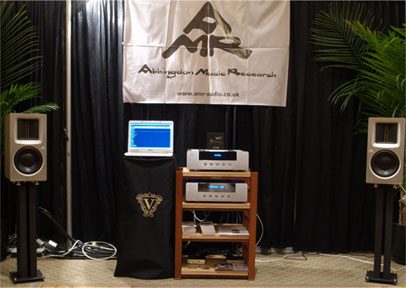
The overclaiming continues. We still see “femto clocks” that earn the name only for jitter integrated from 12 kHz offset upwards (the telecom convention of 12 kHz to 20 MHz), while their phase noise at 10 Hz offset sits around −70 dBc/Hz. My own answer, at AMR in 2009, was to decline to publish a jitter figure at all, although we had the Audio Precision results. The honest answer, “low enough and uncorrelated”, does not fit on a specification sheet as a number.
Noise-like versus correlated jitter
Noise-like jitter
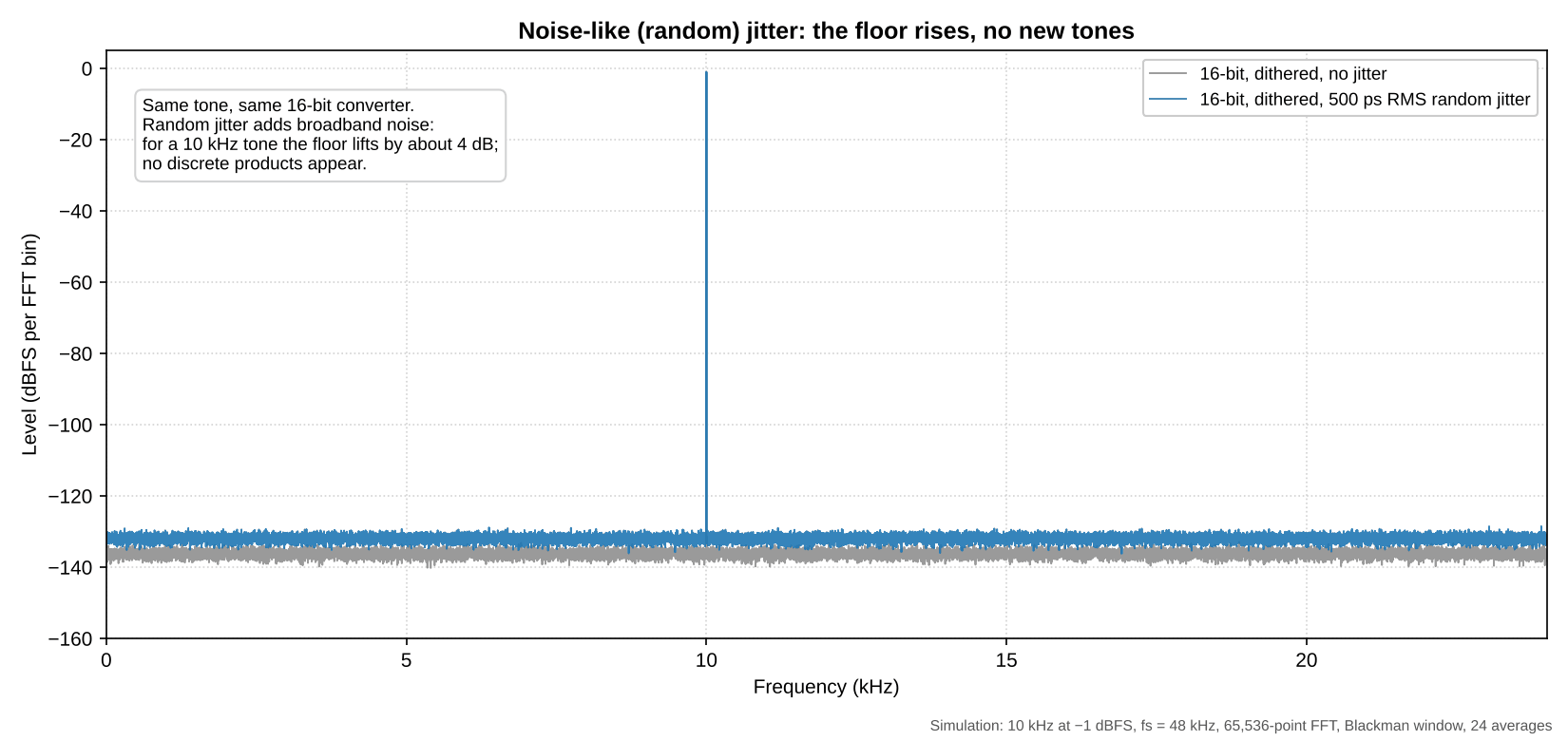
Random, uncorrelated phase noise (flat-band white noise, or 1/f pink noise) simply raises the noise floor. It acts much like analogue noise, and produces no distinct distortion products.
Data-induced and periodic jitter
Phase variations correlated with the audio signal, or with periodic electrical noise, create discrete, unwanted modulation sidebands (spurs) around the audio frequencies. The ear is exceptionally sensitive to such non-harmonic spurs: they bear no musical relation to the tone that causes them, and once they fall far enough from it, masking no longer hides them.
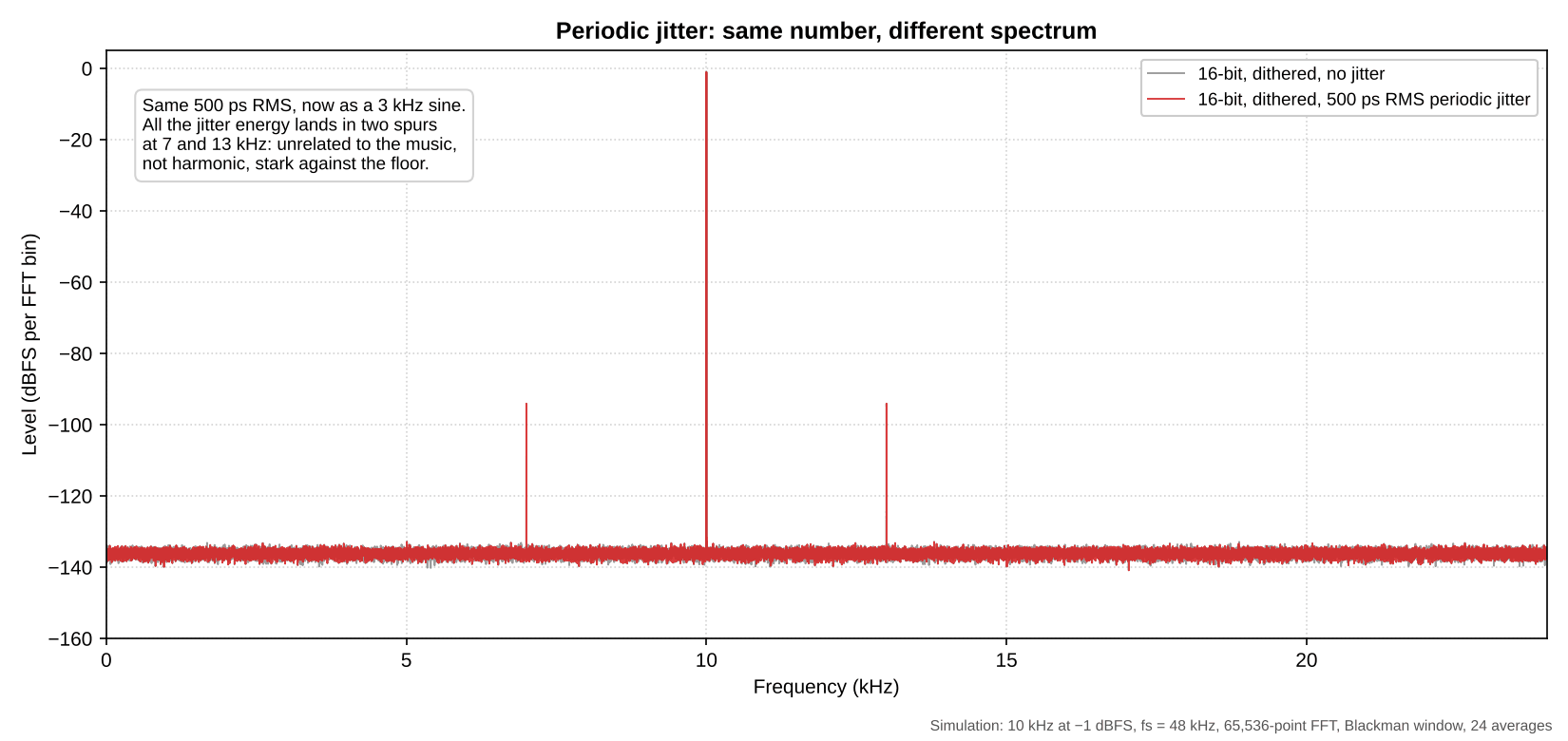
Correlated jitter is a PTS: potential trouble source. A technical feature that can cause audible fidelity impairment while staying invisible to the usual FOMs, unless the design addresses it. The Audio Heretick's Progress: the FOM and PTS →: hidden inside the same single number, harmless when the design deals with it, audible when it does not.
So “nn ps of jitter” tells us nothing about what this jitter is. Is it noise? Is it periodic? Is it data-induced? The two graphs above show the same 500 ps RMS. A jitter figure without its spectrum is just a single FOM: figure of merit. A single number, such as THD+N, SINAD or jitter in picoseconds, used to sum up signal fidelity, with the claim that a better number means better sound. It relates to audible fidelity only at the extremes. The Audio Heretick's Progress: the FOM →, and one that is great for advertising:
The Mega Dominator DAC has ten times less jitter than its nearest competitor!
“Buy it, buy it, buy it, buy it!”

Image: Futurama, © 20th Television, via the Futurama Wiki.
And impulsively, pseudo-commonsensically, as with any signal fidelity impairment FOM: figure of merit. A single number, such as THD+N, SINAD or jitter in picoseconds, used to sum up signal fidelity, with the claim that a better number means better sound. It relates to audible fidelity only at the extremes. The Audio Heretick's Progress: the FOM →, nobody will ask for a product that has MORE of it.
Even though, perhaps, THEY SHOULD?
Audibility limits at 105 dB peak SPL
Under demanding listening conditions matching the THX cinema reference (105 dB SPL peaks), a clean system needs its noise and artefacts to sit below the threshold of hearing in a quiet room, which lies near 0 dB SPL in the most sensitive region, 2 to 5 kHz.
For correlated, data-induced or periodic jitter, which concentrates its energy into sharp, distinct spurs, the limit is extremely low. Julian Dunn (1992) derived it for the worst case: a full-scale sinusoidal signal, playback at up to 120 dB SPL, and sidebands audible from 0 dB SPL. For jitter at 20 kHz the limit is 20 ps peak-to-peak. It relaxes by 6 dB per octave towards lower jitter frequencies, to about 1 ns at 500 Hz. Below 200 Hz the sidebands sit so close to the tone that masking hides them, and up to 500 ns can pass. Scaled down to 105 dB peaks, the limits relax by 15 dB, to about 110 ps peak-to-peak for jitter at 20 kHz.
Uncorrelated, noise-like jitter is far less audible. By my estimate it takes some 200 ps to 500 ps RMS before the raised floor becomes perceptible; the lower end matches the 250 ps RMS that Meitner and Gendron derived for 16 bits (see below).
In theory, a noise floor below −105 dB in the midrange needs an ENOB (effective number of bits, a measure of DAC noise and linearity) of around 17 to 18 bits to clear this hurdle. Even very quiet rooms, however, have background noise well above 0 dB SPL (20 dB(A) is extremely quiet), so 16-bit audio just scrapes by as the bare minimum.
All figures in this section are calculations and estimates, not listening results. Establishing real thresholds needs what has not been done yet: proper, structured, large-scale listening tests.
Jitter limits for audible transparency (20 Hz to 20 kHz)
To keep 16-bit precision up to the limit of human hearing (20 kHz), the maximum allowable aperture jitter (σj) is calculated against the 1 LSB voltage step: a full-scale 20 kHz tone must not be moved by more than one LSB.
This threshold for absolute signal fidelity is very low, and it scales with the weight of one LSB: 16 bits are much less demanding than 18 or 24 bits.
Perhaps surprisingly, higher sample rates do not tighten the requirement, UNLESS we extend the bandwidth beyond 20 kHz, beyond what is commonly considered audible.
For absolute signal fidelity at 16 bits, a multibit DAC needs jitter below about 250 ps (not the 100 ps so often cited), while with a pure delta-sigma DAC as little as 10 ps can cause measurable degradation. Delta-sigma converters are worse off for a simple reason Dunn points out: jitter well above the audio band, at 150 kHz for example, modulates the shaped noise of the modulator around that frequency, and the products fall right into the most critical part of the audio band.
But we are asking about AUDIBLE fidelity here, not signal fidelity.
To preserve signal integrity within the audible band (20 Hz to 20 kHz), my estimate for a multibit DAC is around 250 ps RMS of uncorrelated (noise-like) jitter, which raises the noise floor by no more than about 3 dB. That is the noise added by 1 LSB of rectangular (RPDF) dither; standard triangular (TPDF) dither adds about 4.8 dB. Meitner and Gendron (1991) reached the same figure: jitter that causes no more than a 1 LSB error on a full-scale 20 kHz tone allows 250 ps RMS (500 ps peak-to-peak) of white jitter for 16 bits, and raises the noise floor by no more than 3 dB (as summarised by Dunn, 1992, section 3.2).
As said, the converter technology plays a role. With a 16-bit multibit DAC, 250 ps RMS of noise-like jitter is physically incapable of altering the audio signal in ways that may be audible. Hybrid and delta-sigma DACs need much lower uncorrelated jitter. And distinct single spurs must be reduced by a much greater degree still.
The high-end DAC conundrum
We see many products that apply significant engineering effort and cost to minimising jitter. Many of them are very highly regarded by listeners and reviewers.
Yet we also see products, just as highly regarded by listeners and reviewers, that use digital circuitry with objectively high levels of clock jitter. A few “poster child” examples:
| Manufacturer and model | S/PDIF receiver | DAC chip | Conversion architecture | Review summary |
|---|---|---|---|---|
| Audio Note UK DAC 5 | CS8414 | AD1865 | Multibit (R-2R), no digital filter | Praised for an organic, texturally fluid midrange that completely avoids digital glare. |
| Zanden Model 5000 | CS8414 | TDA1541A-S2 | Multibit (current sources with DEM), no digital filter | “Smoothness and treble refinement” (6moons, MkII) |
| Timbre Technology TT-1 | CS8412 | CS4328 | Delta-sigma, 18-bit, 64× oversampling | “World-class soundstage” (Stereophile) |
| Yamamoto YDA-01 | CS8416 | 2 × PCM1794A | Hybrid (“advanced segment”) | “A lifelike feeling” (Enjoy the Music, 2008) |
The classic Cirrus Logic (Crystal) S/PDIF receivers, from the CS8412 all the way to the still-current CS8416, use a CMOS ring voltage-controlled oscillator (VCO). This kind of oscillator has high phase noise, which translates into high uncorrelated jitter. In addition, the PLLs of the CS8412 and CS8414 did not reject audio-band jitter from the source.
In effect, the CS8412 and CS8414 passed correlated source jitter straight through to the converter, and details of their IC design added data-induced jitter on top. All CS8412/14-based DACs are reported to be extremely sensitive to the “quality” of the transport, and that matches my own experience: they pass on source jitter directly. On top of that, they retain high levels of uncorrelated jitter from the ring VCO, which may in fact help to mask some of the correlated jitter. That last point is my heuristic extrapolation, not established fact.
This applies to the Timbre TT-1 as much as to the multibit designs, despite its delta-sigma CS4328, which by the numbers above should be the most jitter-sensitive of the four. Its reputation, like theirs, is the reputation of the DAC with whichever transports it was heard with. The CS8416 was engineered with preamble lock to overcome exactly this weakness (see below).
This leaves us with a conundrum.
Products with high levels of jitter are not reputed to sound broken, or even poor. Some are held in as high esteem as products built with extensive and expensive engineering to eliminate jitter. One option is to conclude that “jitter doesn’t matter”, which is of course wrong. The other is that jitter matters, but as a weighted spectrum (and nature) instead of a single-number FOM: figure of merit. A single number, such as THD+N, SINAD or jitter in picoseconds, used to sum up signal fidelity, with the claim that a better number means better sound. It relates to audible fidelity only at the extremes. The Audio Heretick's Progress: the FOM →.
A harsh look at the CS8416
As the CS8416 specifically triggered this article, it is worth a closer look. It was a departure for Cirrus Logic. The earlier receivers (CS8413/14) updated the phase detector of their PLL once per bit of the S/PDIF stream, a data-dependent rate. The CS8416, released in 2002, updates it only once per subframe, on the preamble, “to support 192 kHz sample rates and to reduce data dependency”. A faster option (PDUR = 1) was added in 2004, but it is limited to 108 kHz. The consequences are set out in detail in Cirrus Logic’s application note AN339, “CS8416 Delivers Performance Gains Over CS8413/14”.
The upshot: a CS8416 set up to accept 176.4/192 kHz (which is what everyone does) runs in the original, slow mode. It largely ignores data-induced jitter, but carries a lot of uncorrelated, noise-like jitter on its recovered clock. How much? AN339 measured 531 ps of baseband jitter (100 Hz to 40 kHz) at 48 kHz. Fascinatingly, the jitter falls as the sample rate rises, to about 212 ps at 96 kHz and 215 ps at 192 kHz: the more often the phase detector is updated, the less time the VCO has to wander. For comparison, the CS8414 measured 158.5 ps at 48 kHz.
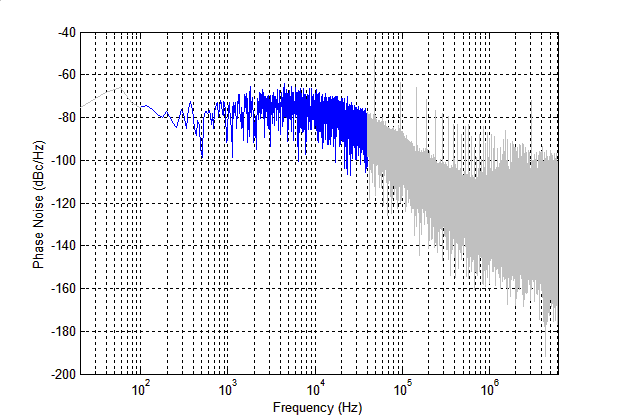
As a signal fidelity impairment this is real, and AN339 shows it. Driving a CS4398 DAC at 48 kHz, a full-scale 18 kHz tone reached −90.1 dB THD+N with the CS8416 in this mode, against −99.2 dB with the CS8414. At 997 Hz the difference was 1.5 dB (−105.5 against −107.0 dB).
Some 530 ps of uncorrelated jitter will materially reduce the SNR of a 16-bit DAC for high-frequency content, though likely by not much more than the noise standard dither adds, and to a level far below traditional analogue electronics and tape noise. Unlike tape hiss, this noise is not dither: it scales with the slope of the signal and vanishes in quiet passages. It behaves like tape modulation noise instead, appearing only together with the high-frequency content that causes it, and largely masked by it.
Thus we have a significant, observable impairment of signal fidelity, yet audible fidelity may be subjectively unaffected. The long-standing acceptance of high-jitter receivers like the CS8416 in highly regarded multibit and 24-bit audiophile systems would seem to stem largely from the spectral composition of their phase noise.
The CS8416 in PDUR = 0 mode largely avoids data-related jitter, and with it the harsh-sounding, non-harmonic sideband spurs. Instead, it shows a steady combination of low-level flat white noise and close-in 1/f drift. Psychoacoustically, I would expect this distribution to be non-fatiguing, closer to the modulation noise of a premium analogue tape path than to hard digital glare.
Engineering principles for DACs with low audible fidelity impairment
To build (or select) a converter for audible fidelity, the simplistic measured jitter FOM: figure of merit. A single number, such as THD+N, SINAD or jitter in picoseconds, used to sum up signal fidelity, with the claim that a better number means better sound. It relates to audible fidelity only at the extremes. The Audio Heretick's Progress: the FOM → is a poor guide.
What is important: correlated jitter must be systematically eliminated before the conversion boundary. Uncorrelated jitter is far more benign than the headline number suggests. The specific DAC technology determines how much uncorrelated jitter is permissible.
A CS8416 with its noisy VCO may be just what actually delivers better audible fidelity than a super-low phase noise Crystek clock.
So the specification needs rectifying: a jitter spectrum, separated into its random and correlated parts and weighted by what the ear can hear, instead of a single number. And the research needs reforming. Compared with other subjects in audio, even controversial ones, jitter audibility is especially poorly researched. What it needs are proper, structured, large-scale listening tests.
Dismissing jitter as inaudible by referring to studies that suggest very high thresholds is cargo cult science. The study usually cited, Ashihara et al. (2005), is a textbook case of cargo cult science (see Appendix Two), and its conclusions are extremely unreliable and lack statistical power.
Demanding the radical extermination of jitter to the lowest possible level is the same cargo cult, seen from the other side.
Simply resorting to a lot of unstructured listening, absent a coherent system for removing bias and establishing true preference, is witch-doctoring.
To echo a noted Latin percussionist (Richard Feynman, “Cargo Cult Science”, 1974): jitter as a single number is one more cargo cult FOM: figure of merit. A single number, such as THD+N, SINAD or jitter in picoseconds, used to sum up signal fidelity, with the claim that a better number means better sound. It relates to audible fidelity only at the extremes. The Audio Heretick's Progress: the FOM →. The form is perfect, but the planes don’t land. It ought to be looked into!
Appendix One: The jitters over the decades
- Robert Harley, CD: Jitter, Errors & Magic, Stereophile, May 1990.
- John Atkinson, Jitter, Bits & Sound Quality, Stereophile, December 1990.
- Robert Harley, The Jitter Game, Stereophile, Vol.16 No.1.
- Rémy Fourré, Jitter & the Digital Interface, Stereophile, October 1993.
- Malcolm Omar Hawksford and Chris Dunn, Bits is Bits?, Stereophile, March 1996. First presented as “Is the AES/EBU/S/PDIF digital audio interface flawed?”, AES 93rd Convention, October 1992, preprint 3360.
- John Atkinson, A Case of the Jitters, Stereophile, January 2009.
Appendix Two: Ashihara et al. (2005), a textbook case
Ashihara et al., “Detection threshold for distortions due to jitter on digital audio” (2005), is the study usually cited to dismiss jitter as inaudible. It is a textbook case of cargo cult science:
- It is ABX in all but name. Listeners clicked buttons labelled A, B and X, with X always the undistorted reference, and judged which of A and B matched it. The paper calls this a “2 alternative forced choice paradigm”. It carries all the known weaknesses of ABX testing (Appendix: ABX).
- The statistics are not disclosed. A listener “passed” a jitter level with 7 correct answers before 3 wrong ones, at most 9 trials. The paper reports only how many of its 23 listeners passed each level: no individual scores, no significance levels, no confidence intervals, no psychometric function. By my arithmetic, pure guessing passes this test about 9 % of the time, while a listener who genuinely hears the difference 70 % of the time fails it more often than not (passing only 46 % of the time).
- There is no error budget. Each listener used their own DAC, amplifiers and loudspeakers. None of these was measured: not their own jitter, nor the noise and distortion the added jitter had to rise above. The authors concede that it is unclear whether the threshold reflects the limits of hearing or the “resolution of equipment”.
- The results table does not add up. The jitter levels read 2 ms, 1 ms, 500 ns and 250 ns, in steps that are meant to halve. The first two can only be µs. A thousandfold unit error passed peer review.
- It tested random jitter only, the benign kind, simulated in software.
- Its own conclusion is more modest than its headline. Citing Benjamin and Gannon’s 30 ns for sinusoidal jitter, the paper puts the maximum acceptable jitter at “the order of ns”. It is the abstract’s “several hundreds ns” that gets quoted.
The form is perfect: a peer-reviewed journal, blind testing, forced choice, trained listeners. The substance is missing.
Appendix Three: References
- Blesser, B. A., “Digitization of Audio: A Comprehensive Examination of Theory, Implementation, and Current Practice”, Journal of the AES, Vol.26 No.10, pp.739–771, October 1978.
- Dunn, J., Jitter: Specification and Assessment in Digital Audio Equipment, AES 93rd Convention, October 1992.
- Meitner, E. and Gendron, R., Time Distortions Within Digital Audio Equipment Due to Integrated Circuit Logic Induced Modulation Products, AES 91st Convention, October 1991, preprint 3105.
- Schwartz, J., AN339: CS8416 Delivers Performance Gains Over CS8413/14, Cirrus Logic, July 2009.
- Ashihara, K. et al., Detection threshold for distortions due to jitter on digital audio, Acoustical Science and Technology, Vol.26 No.1, pp.50–54, 2005.
- Takeuchi, M. and Saito, H., Absolute measurement of sampling jitter in audio equipment, Journal of the Acoustical Society of America, Vol.154 No.1, p.443, 2023.
- Feynman, R. P., “Cargo Cult Science”, Caltech commencement address, 1974.