
Decades of Musings on HiFi

Audio, acoustics and electronics

aka „Des Technokraten Gruselkabinett“

Buy me a highball
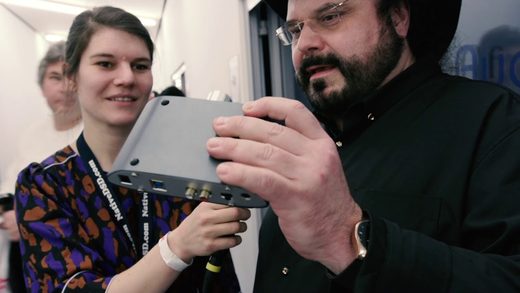
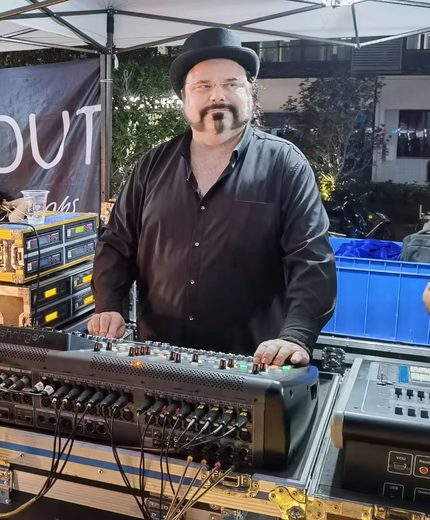
Thorsten showing the iFi Zen DAC at High End 2019 Thorsten Mixing at a Behringer 32 Channel Digital Mixing Desk
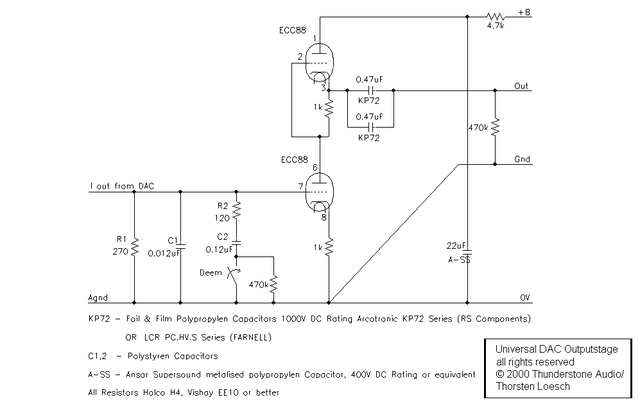
Converter theory: multibit.gif
Converter theory
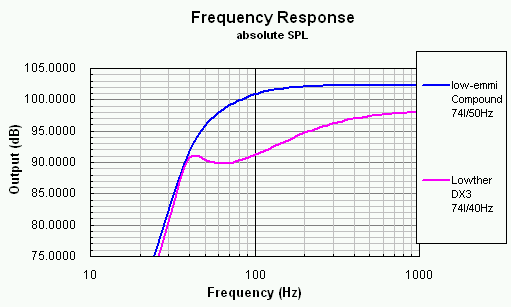
DDDL: Double Driver Dynamic Loading: Image11.gif
DDDL: Double Driver Dynamic Loading

Repair

Un-improving a Jadis

A pair of Jadis JA-30 valve amplifiers, blown up, then "improved" by someone else, and finally returned to the original Jadis circuit.

Published here

This pair of Jadis amplifiers arrived on my bench in the late noughties, with a history.

What was wrong

The amplifiers had blown up completely: bad mains, valve runaway and smoke. The output transformers and the circuits were destroyed, in both channels. Big time.

A Hong Kong “Shifu” (Shifu = Master) was then given the job. Rather than repair or rebuild the amplifiers, he redesigned and “improved” them. They did get new output transformers, which I rate as better than Jadis’s own. But the circuit he used was neither well thought out nor well optimised.

The owner was extremely dissatisfied. He wanted his amplifiers “re-Jadis’ed”, and had not turned his system on for over a year.
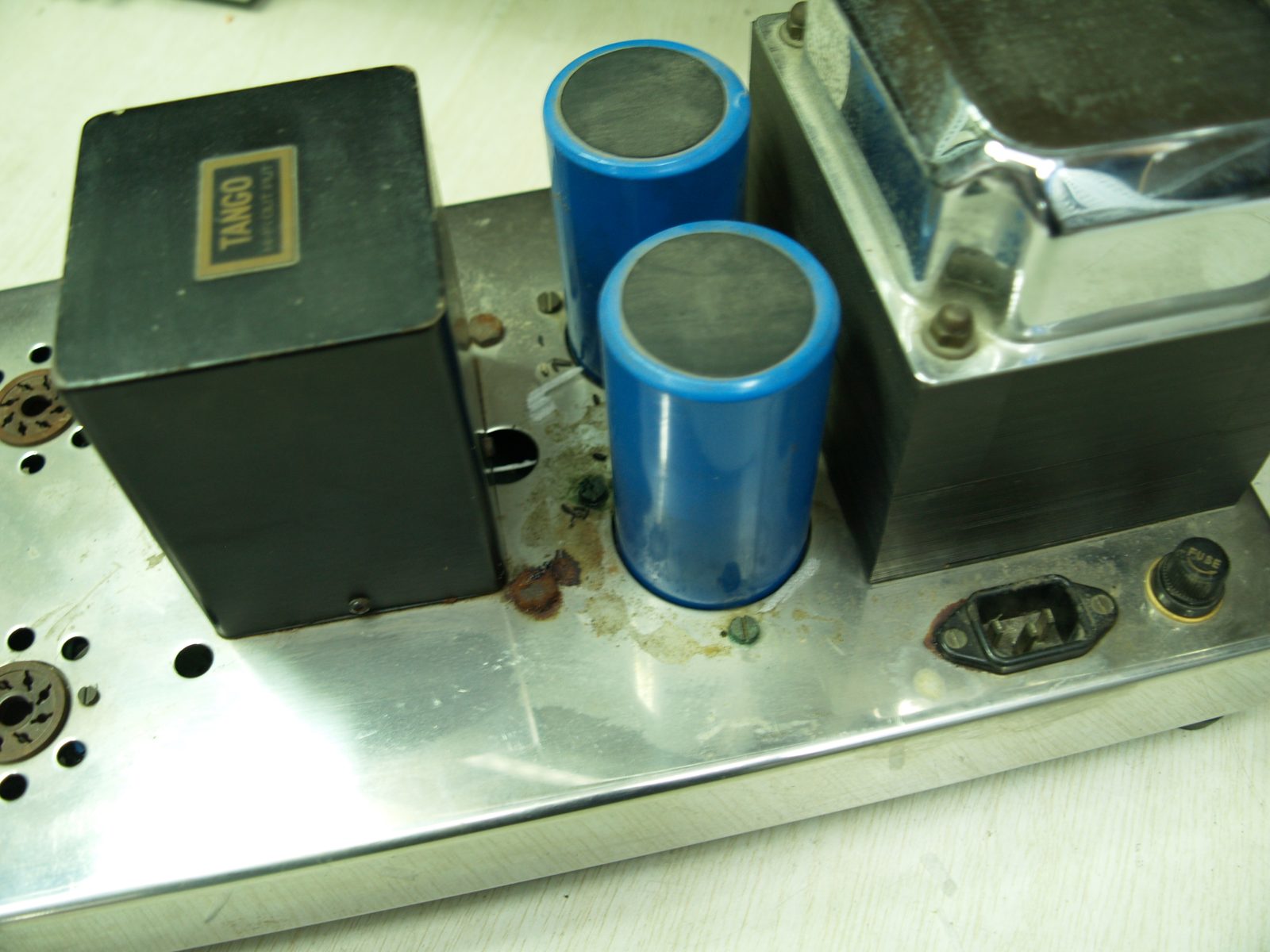
Photograph: an amplifier’s top plate with a black transformer case labelled Tango, two large blue capacitors, a chrome-covered transformer and corrosion marks on the plate
As it arrived: a Tango transformer, two large blue capacitors and corrosion on the top plate.

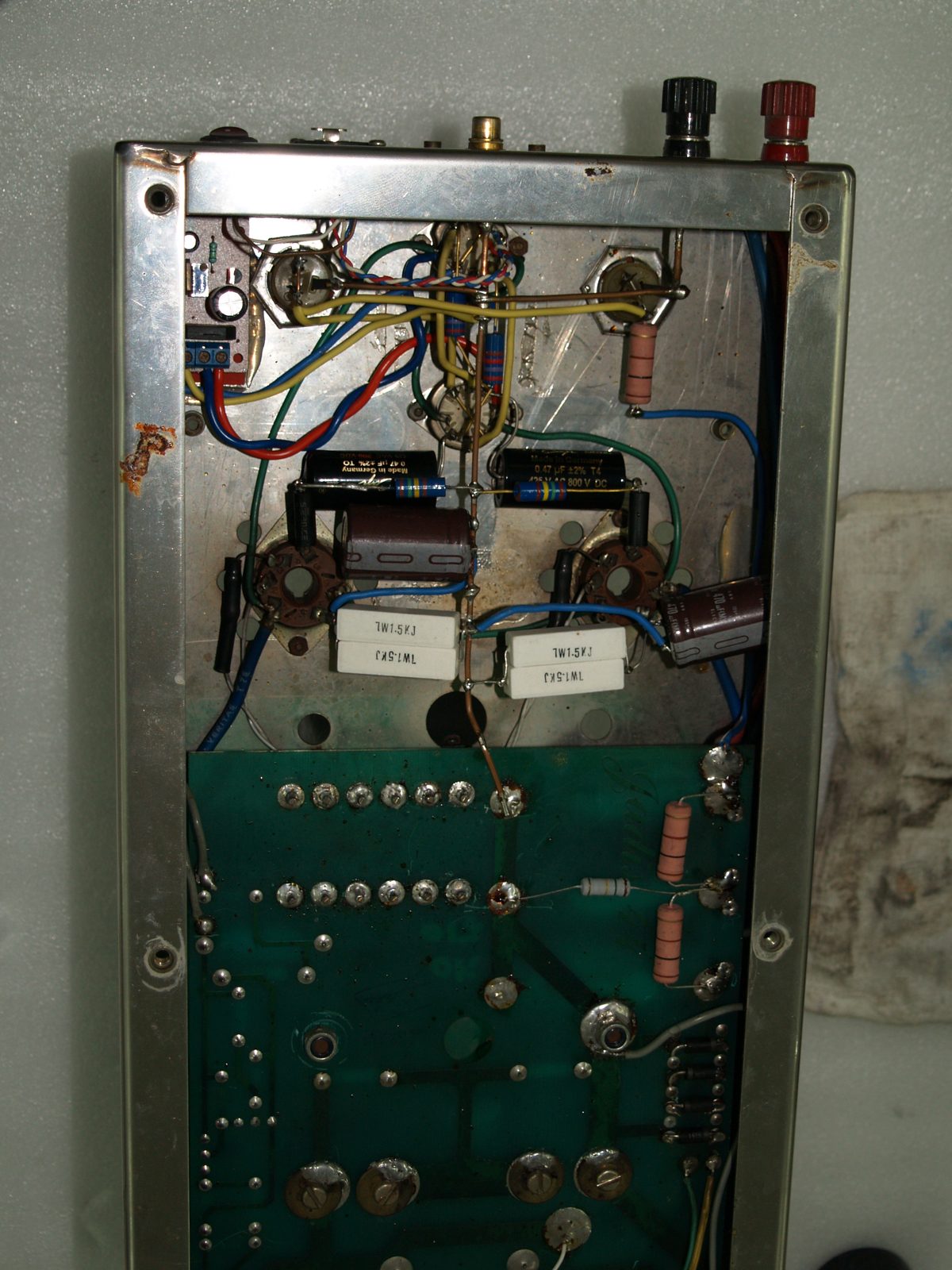
Photograph: the underside of one amplifier, chassis on end, with white wirewound resistors, brown electrolytic capacitors and wiring above the green circuit board
As it arrived, under the chassis.

What was done

The job started with electronic archaeology: finding a documented, reliable schematic, and finding pictures of the internals to establish which parts Jadis had used.

No original JA-30 schematic could be located. The JA-80 schematic served as the guide instead: it is the same circuit, but with double the output valves.
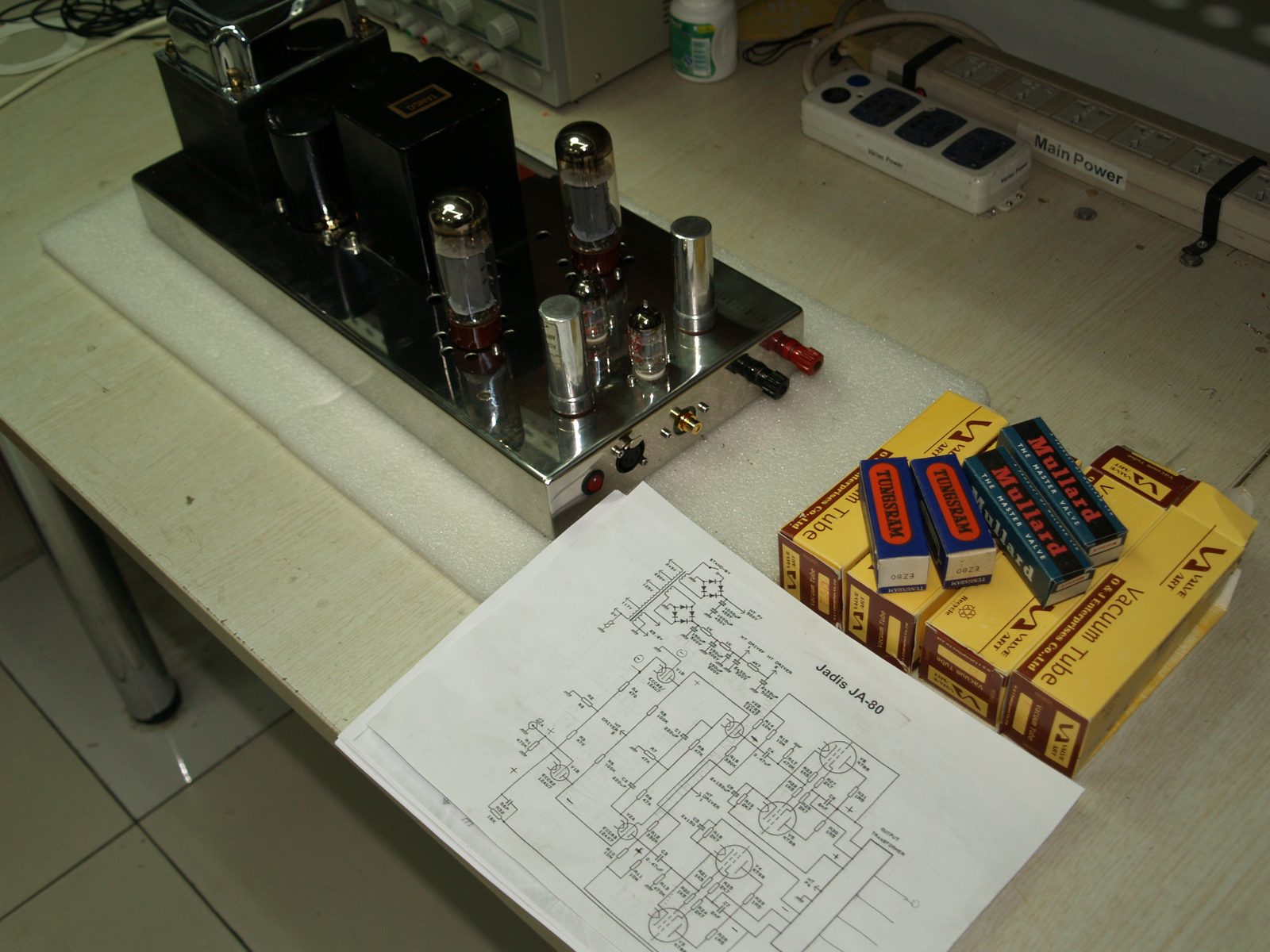
Photograph: an amplifier on the bench with its valves fitted, a printed schematic headed Jadis JA-80 in front of it, and boxed new valves from Mullard and Tungsram beside it
The JA-80 schematic, used as the guide, and a set of boxed valves.

Rebuilding the amplifiers to the original design was then actually the easy part.
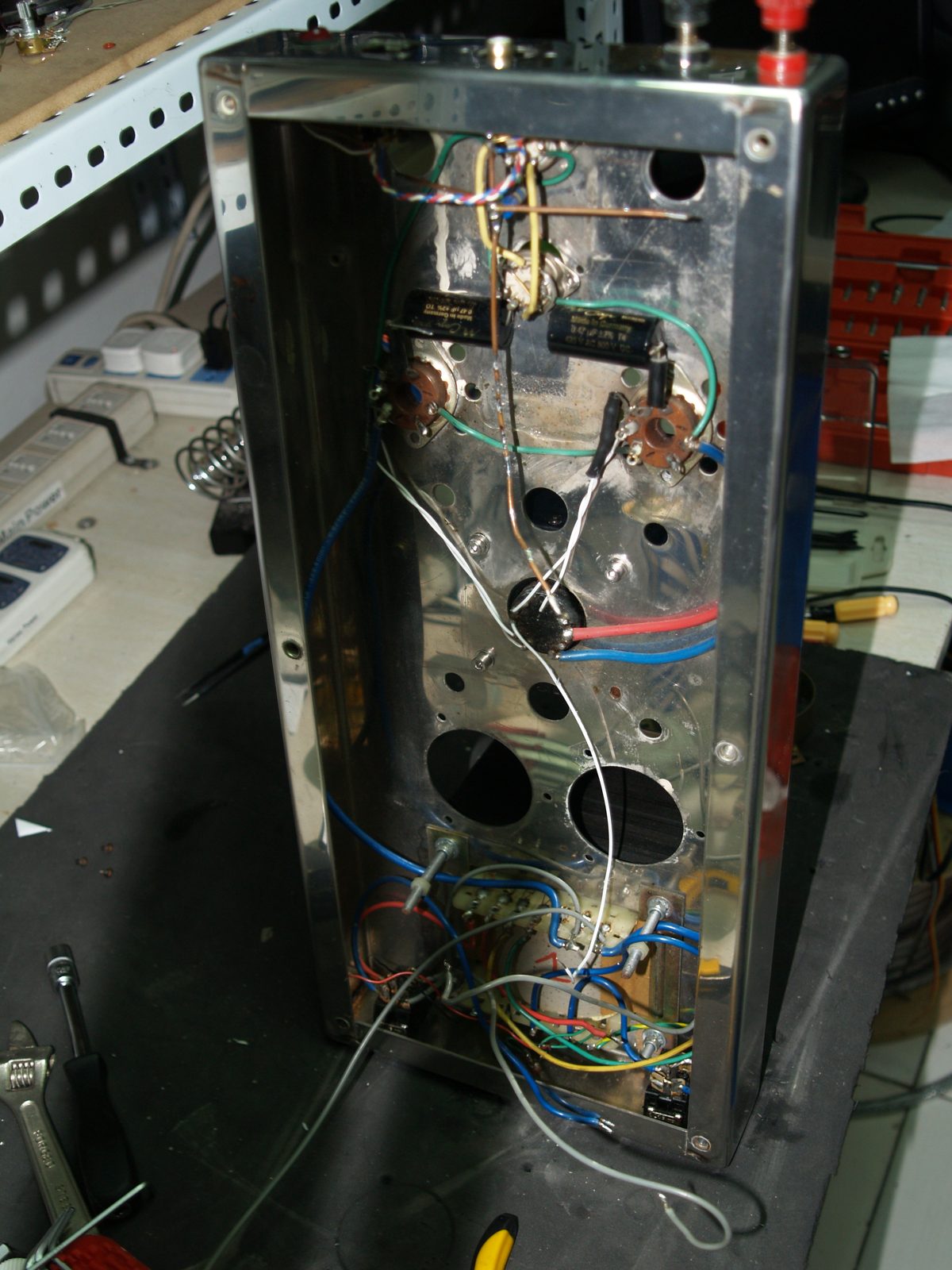
Photograph: an amplifier chassis standing on end, opened, with most of the wiring removed
Stripped.

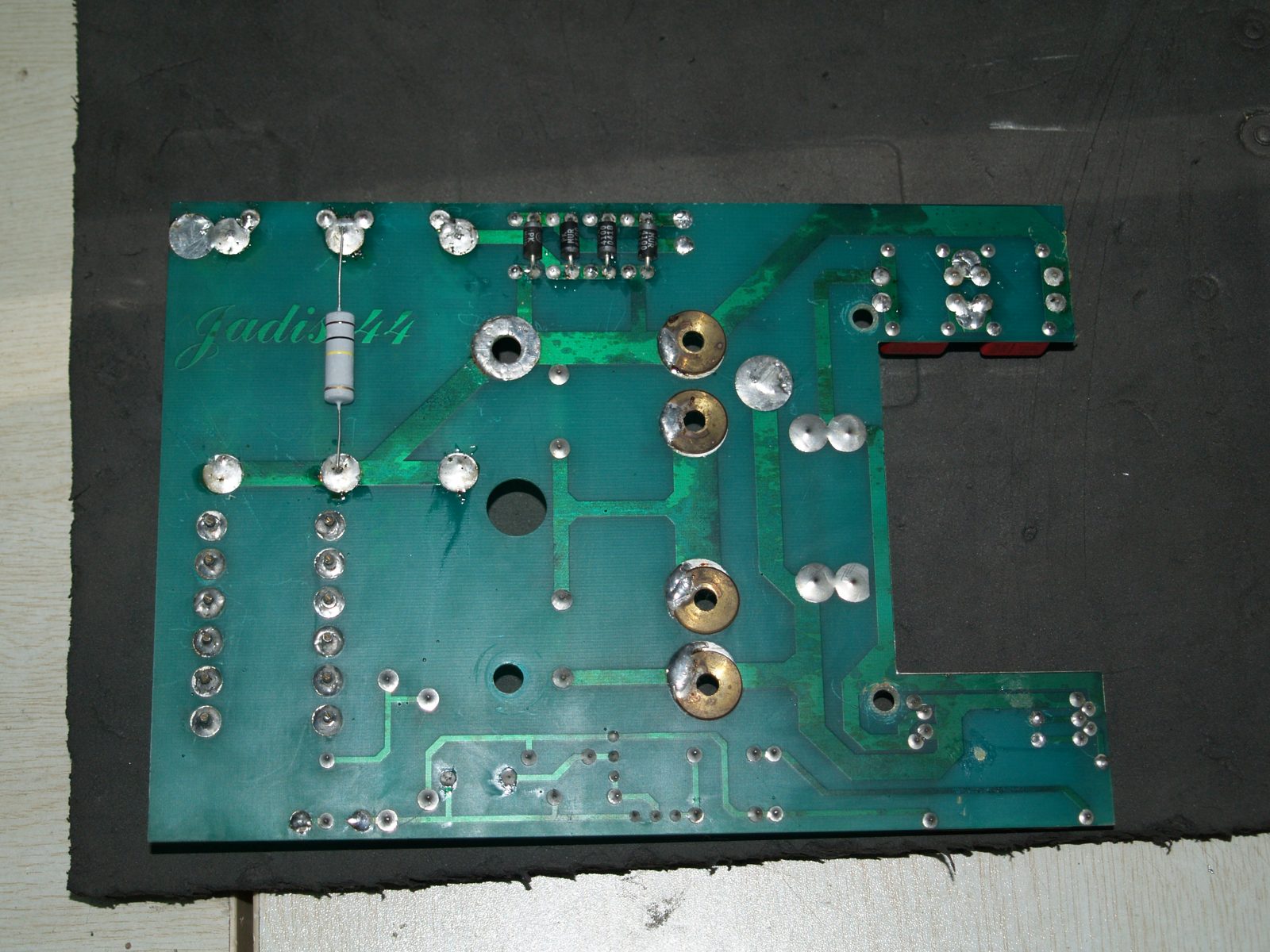
Photograph: the copper side of a green circuit board, marked Jadis 44 in script
The main board, marked \"Jadis 44\".

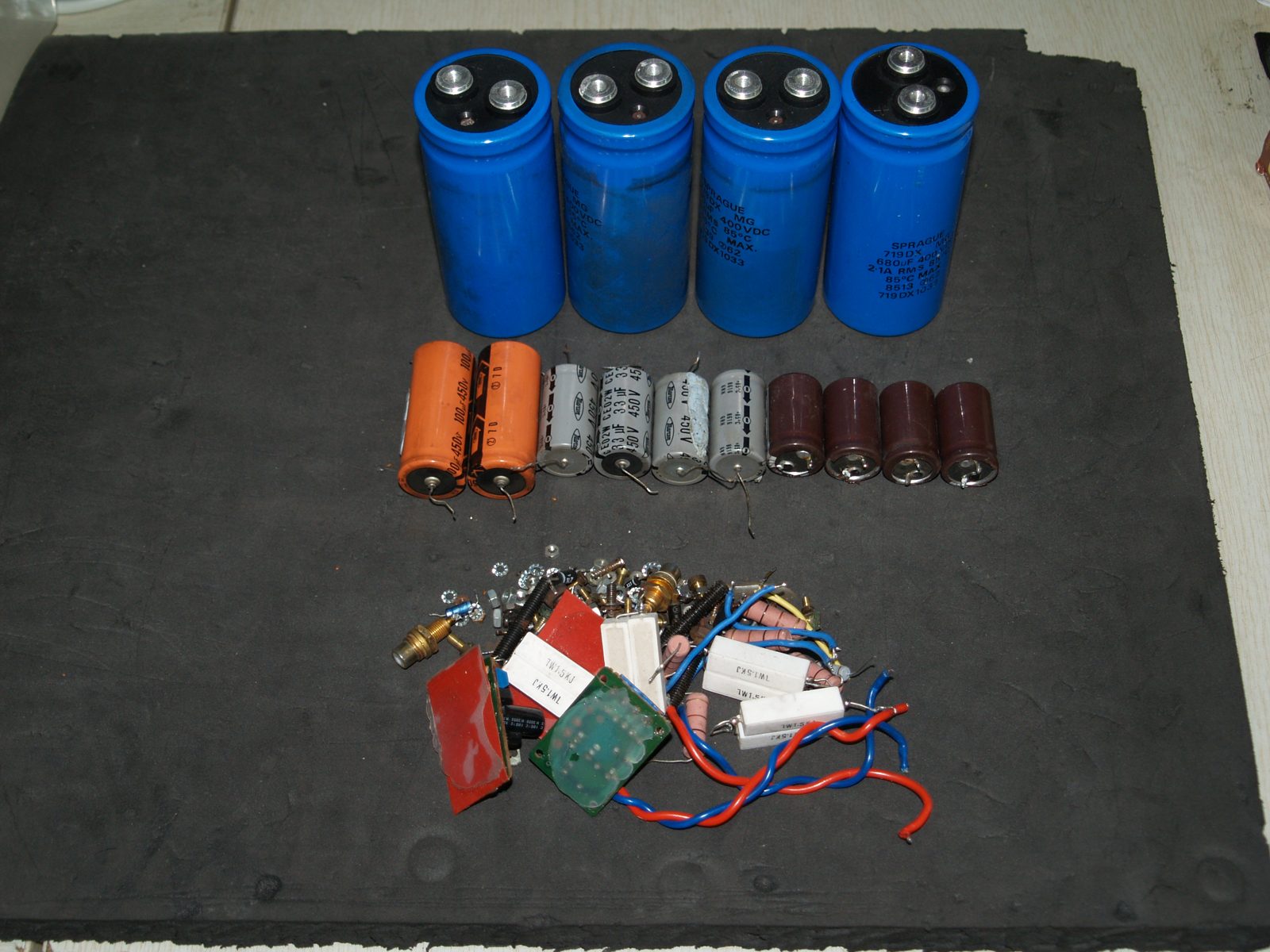
Photograph: parts laid out on a dark foam mat: four large blue capacitors, a row of smaller electrolytic capacitors, and a pile of resistors, wire and a small board
What came out: the four blue capacitors, smaller electrolytics, resistors and wiring.

Result

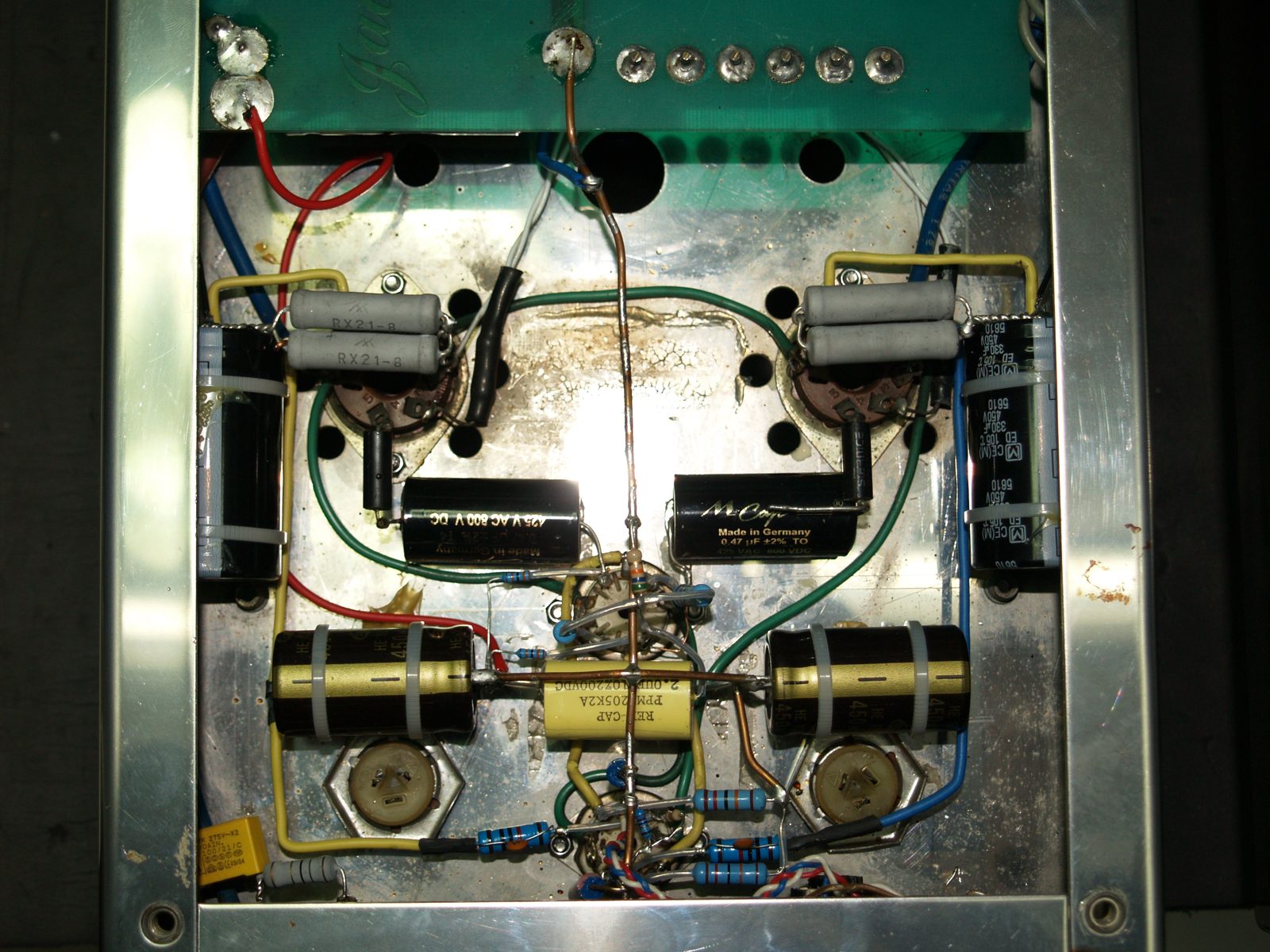
Photograph: the underside of a rebuilt amplifier: valve sockets, grey wirewound resistors, black MCap and yellow Rel-Cap film capacitors and gold-sleeved electrolytic capacitors, neatly wired
Rebuilt, under the chassis.

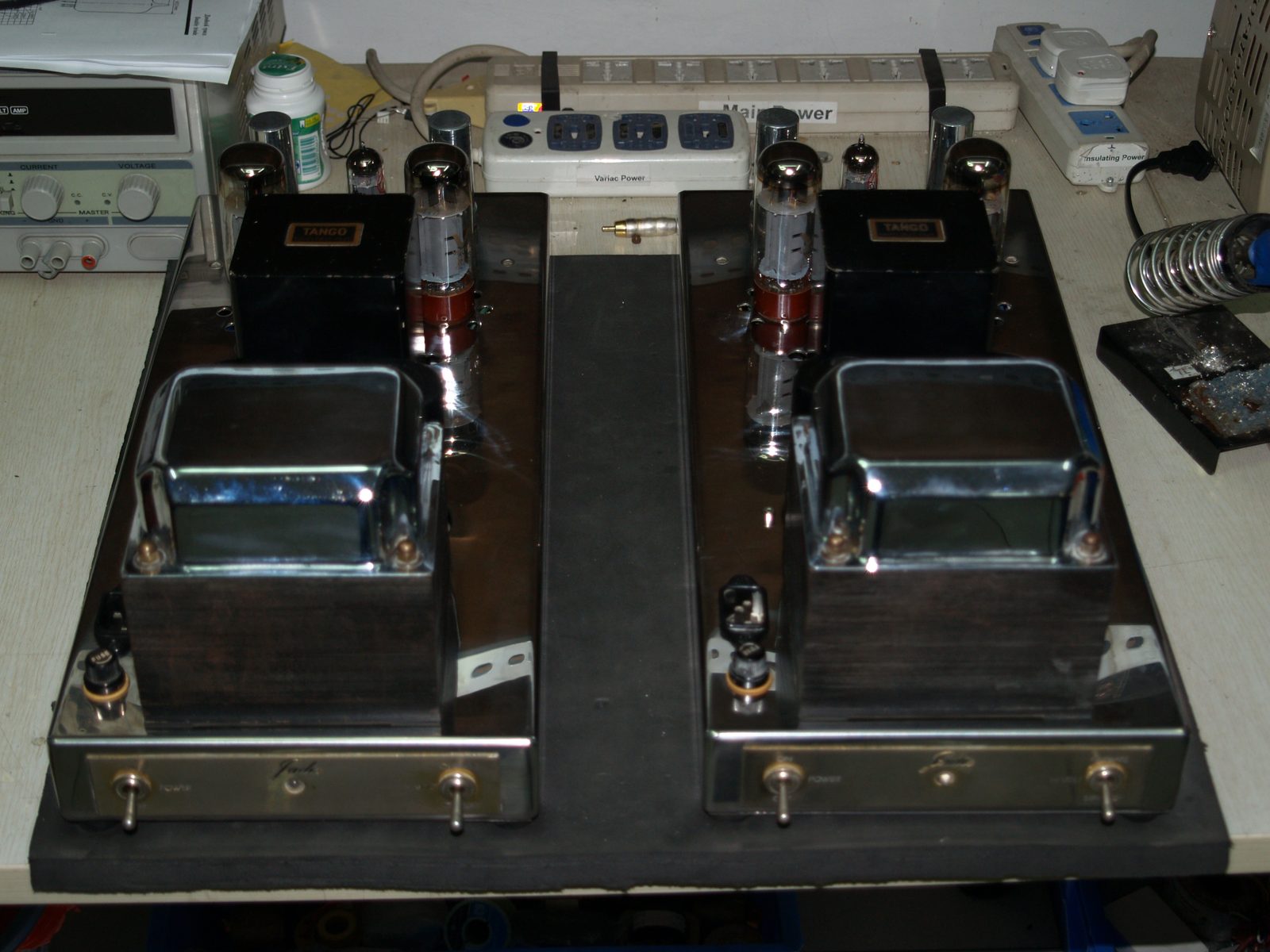
Photograph: the two finished amplifiers side by side on the bench, each with a chrome-covered transformer, a black Tango transformer case and its valves fitted
The finished pair. The Tango transformers stayed.

I personally did not like the result all that much. The owner, however, was greatly satisfied: his amplifiers again gave the “good sound” he had come to be accustomed to.

And arguably, in his own classic “Hong Kong” system, the sound of the whole was excellent: BBC LS3/5a loudspeakers with bass extenders, a Jadis preamplifier, an early-1990s DAC whose make I no longer remember, and a CEC belt-drive CD transport.
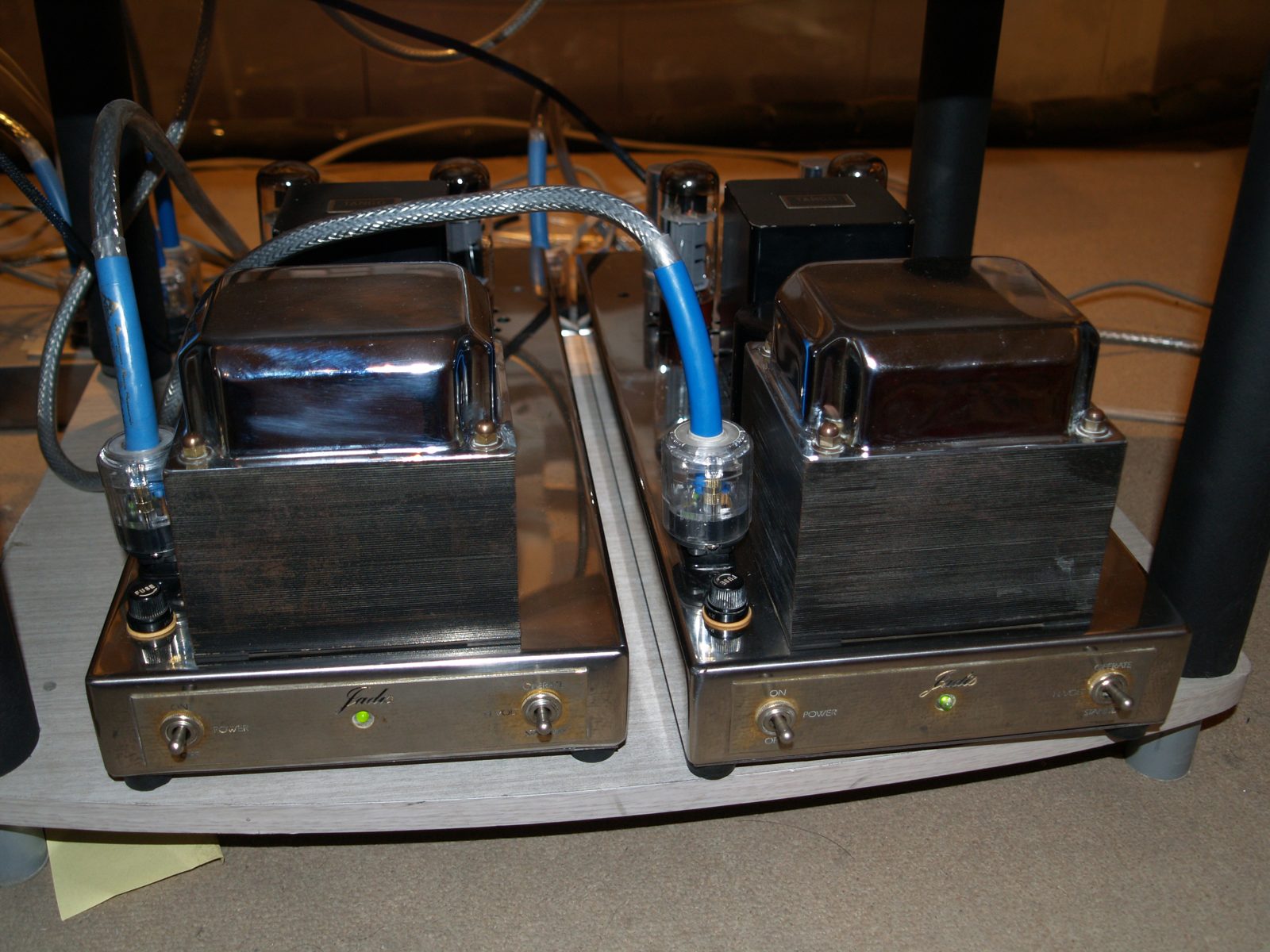
Photograph: the two amplifiers side by side on a low stand in the owner’s room, with power cords connected and power lights on
Back home, in the owner's system.